
How to Invest in Real Estate With No Money: 7 Proven Strategies
Real estate has a reputation for being expensive - and in some ways, that reputation is deserved. A standard 20% down payment on a $300,000 property means you need $60,000 before you even close. But here's what most people don't know: a huge percentage of successful investors got started without that kind of cash.
In this guide, you'll learn seven strategies that real beginners use to invest in real estate with little or no money down. Some involve creative financing. Some involve partnering with others. And some let you start with as little as $10 online. Let's break them all down.
Why "No Money" Investing Is Real (and Legal)
Before we dive in, let's be clear: "no money" doesn't mean "no risk" or "no work." These strategies require effort, education, and often some hustle. But they are legitimate, widely used approaches - not loopholes or get-rich-quick schemes.
The key insight is that money is just one form of value. Deals get done when someone brings a property, someone brings capital, someone brings knowledge, and someone brings time. If you don't have capital right now, you can bring one of the other three.
Strategy 1: House Hacking
House hacking is the single best starting strategy for most beginners. The idea: buy a small multi-family property (duplex, triplex, or fourplex) using an FHA loan with as little as 3.5% down. Live in one unit, rent out the others. If done right, the rental income covers your mortgage - meaning you live for free (or close to it) while building equity.
Why it works: FHA loans have low down payment requirements because you're treating it as your primary residence. That 3.5% on a $250,000 duplex is $8,750 - far more achievable than a $50,000 investment property down payment.
Real example: Andrew buys a duplex for $280,000. He puts 3.5% down ($9,800) using an FHA loan. He lives in one unit and rents the other for $1,400/month. His mortgage is $1,600/month - so he's paying just $200 for housing while a tenant builds his equity.
After one year, he can move out, rent both units, and repeat the process with a new property. This is how many investors build their first portfolio.
Strategy 2: wholesaling
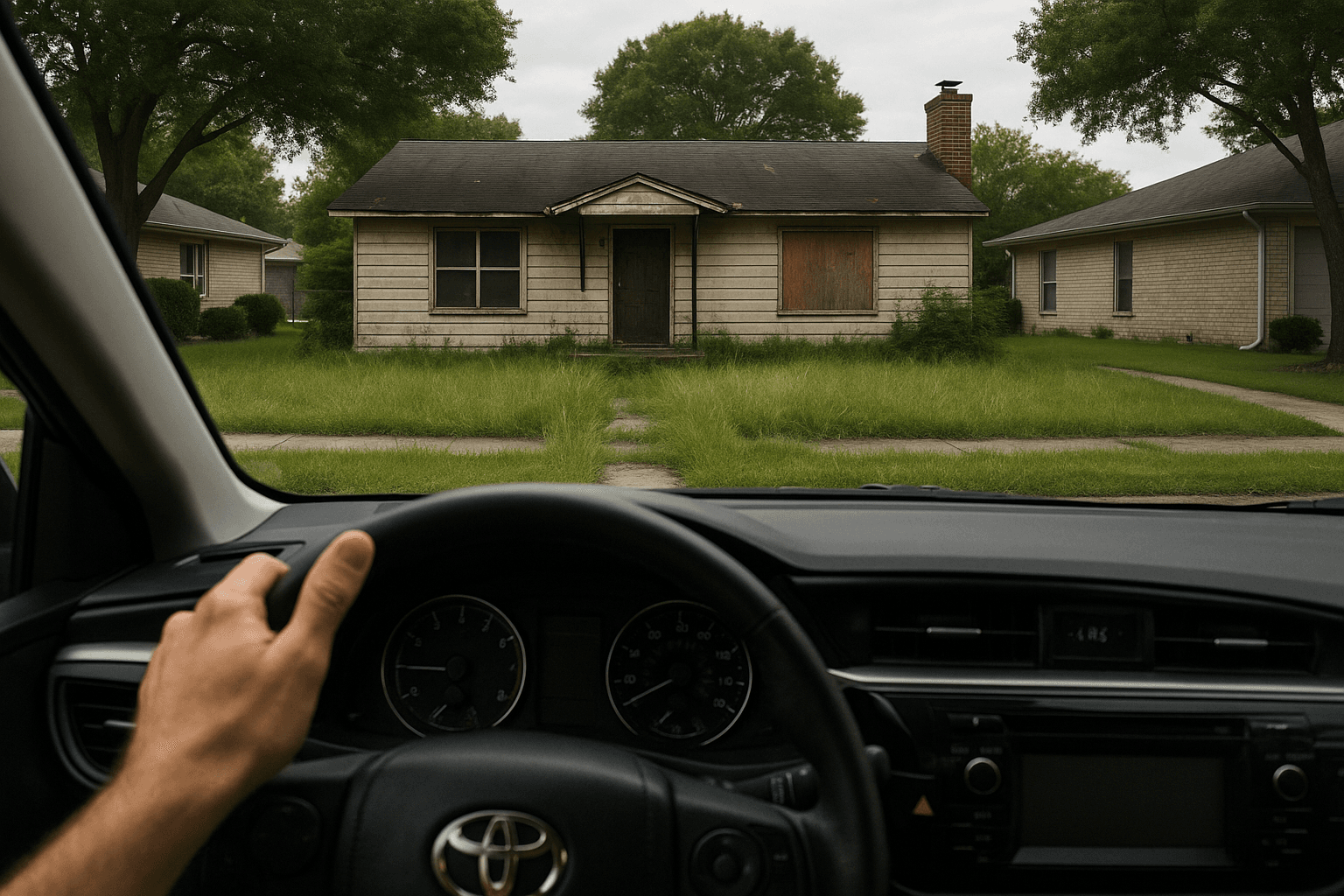
Wholesaling doesn't require you to buy property at all. You find a distressed property, negotiate a purchase contract with the seller at a below-market price, and then sell that contract to a cash buyer for a fee (typically $5,000 - $20,000).
You never own the property. You're being paid for your ability to find deals.
What you need: A basic understanding of property values, negotiation skills, a cash buyer list, and hustle. No license is required in most states (check your state laws), and no money goes to closing.
The hard part: Finding motivated sellers and building your buyer network takes real work. Most wholesalers make their first deal after 30 - 90 days of consistent effort.
Strategy 3: subject-to Financing
This is one of the most powerful - and underused - strategies in real estate. In a subject-to deal, you take over the seller's existing mortgage without formally assuming it. The deed transfers to your name, but the original loan stays in the seller's name.
Why sellers agree to this: Distressed sellers - facing foreclosure, divorce, job loss, or inherited property headaches - often care more about getting out from under a payment than getting top dollar. Subject-to gives them immediate relief.
Why it works for buyers: You acquire the property without needing a new loan. If the existing mortgage rate is 3 - 4% (common for loans originated before 2022), you're locking in financing most buyers today would kill for.
The risk: The "due on sale" clause. Technically, the lender can call the loan due when the deed transfers. In practice, lenders rarely do this as long as payments are being made - but you should understand this risk and work with an experienced real estate attorney.

Strategy 4: Seller Financing
Instead of borrowing from a bank, you borrow directly from the seller. They agree to carry the loan: you make monthly payments to them, they receive interest income, and you get the property without qualifying for a traditional mortgage.
Seller financing works best when sellers own their property free and clear (no existing mortgage) and are motivated by the consistent income rather than a lump sum payout.
Negotiating tip: Offer a slightly higher purchase price in exchange for favorable terms - lower interest rate, lower down payment, or longer repayment period. Many sellers will accept.
Strategy 5: Partnerships and Joint Ventures
If you have time, knowledge, and hustle but no money - find a partner who has money but no time or know-how. Split the deal 50/50 (or whatever structure you negotiate). You find and manage the deal; they fund it.
This is how countless investors get their first few deals done. The key is to have something real to offer: documented deal flow, underwriting skills, project management experience, or local market knowledge.
Important: Always use a written operating agreement drawn up by an attorney. Even deals between friends need clear documentation on profit splits, decision-making authority, and exit strategies.
Strategy 6: BRRRR method
BRRRR stands for Buy, Rehab, Rent, Refinance, Repeat. The goal is to recycle your initial investment: buy a distressed property cheaply (often with a hard money loan), fix it up, rent it out, then refinance to pull out most or all of your initial capital - which you then use to do it again.
Done well, you end up with a rented property and little to none of your own money still in the deal.
What you need: A reliable contractor, accurate rehab estimates, a strong local rental market, and a lender willing to do a cash-out refinance. The BRRRR method is not truly "no money" upfront, but it can be close to zero money left in the deal after the refinance.
Strategy 7: Real Estate Crowdfunding
The most accessible option for pure beginners: invest in real estate through platforms like Fundrise or Arrived Homes starting with as little as $10 - $100. You're buying fractional ownership in income-producing properties - apartment buildings, rental homes, commercial developments.
You don't manage anything. You collect dividends and (over time) appreciation.
The tradeoff: Lower control, lower returns than direct ownership, and limited liquidity. But for someone building capital while learning the fundamentals? It's an excellent starting point.
Which Strategy Is Right for You?
| Your Situation | Best Starting Strategy | |---|---| | You have a job and decent credit | House Hacking | | You have time but no cash | Wholesaling | | You want truly passive income | Crowdfunding (Fundrise/Arrived) | | You found a motivated seller | Subject-To or Seller Financing | | You have a skill partner needs | Joint Venture | | You're comfortable with rehabs | BRRRR Method |
Final Thoughts
The biggest barrier to getting started in real estate isn't money - it's knowledge and action. Every strategy above has been used by real investors to build real wealth, often starting from zero.
Pick one strategy that fits your current situation, learn it deeply, and take the first step. The first deal is always the hardest. The second one gets easier. And by the third, you'll understand why so many people consider real estate the best wealth-building vehicle available to ordinary people.
Ready to start? If you want the easiest possible entry point, Fundrise lets you invest in a real estate portfolio with just $10 and takes about five minutes to set up. That's not a retirement strategy by itself - but it's a real first step that gets you in the game while you work toward your first direct deal.
Frequently Asked Questions
- Can you really invest in real estate with no money?
- Yes, though 'no money' typically means none of your own money, not no money at all. Strategies like wholesaling, seller financing, lease options, subject-to, and partnering with capital investors allow you to participate in real estate deals without using your own savings. Most of these strategies require either hustle, skills, or an existing relationship with someone who has capital.
- What is wholesaling in real estate?
- Wholesaling means finding deeply discounted properties, getting them under contract, and then selling that contract to an investor buyer for a fee. The wholesaler never actually buys the property. Profits typically range from $5,000 to $20,000 per deal. It requires strong deal-finding skills and a buyer network but no capital of your own.
- What is seller financing?
- Seller financing is when the property seller acts as the lender and you make monthly payments directly to them instead of a bank. Terms are negotiable, and sellers often accept smaller or no down payments in exchange for a steady income stream. It works best with sellers who own their property free and clear and want passive income rather than a lump-sum payout.
- Can I use a home equity loan to invest in real estate?
- Yes. A HELOC or home equity loan lets you borrow against the equity in your primary home to fund an investment property purchase or renovation. This is a common way to fund down payments or BRRRR deals without tapping savings. The risk is that your primary home becomes collateral for the investment, so the deal needs to pencil out before you use this approach.
- What is a private money lender?
- A private money lender is an individual (not a bank) who lends their own money to real estate investors, usually secured by the property. Rates and terms are negotiated directly between you and the lender. Private money is faster and more flexible than bank financing, which makes it popular for BRRRR and fix-and-flip deals. Common sources are friends, family, or investors in your network.
Enjoyed this article?
Get our free starter kit and more guides like this.