
Long-Distance Real Estate Investing: How to Buy in Any Market
The biggest mistake new real estate investors make is assuming they have to buy where they live. If you are in San Francisco, New York, or Seattle, that assumption will price you out of cash-flowing deals entirely. Median home prices in those markets are too high relative to rents for the numbers to work.
The solution is long-distance real estate investing - buying rental properties in markets with strong fundamentals, even if those markets are hundreds or thousands of miles away.
Thousands of investors do this successfully. Here is how.
Why Invest Out of State?
Better cash flow: In many Midwest and Southeast markets, you can buy a solid rental property for $100,000-$180,000 that generates real monthly cash flow. That same dollar amount buys you almost nothing in a coastal market.
Better rent-to-price ratios: The gross rent multiplier (GRM) and cap rates in markets like Cleveland, Memphis, Indianapolis, or Kansas City are significantly more favorable than in high-cost cities.
Diversification: Owning property in multiple geographic markets reduces your exposure to any single local economy.
Growth markets: Some of the fastest-appreciating markets in the country are mid-size Sun Belt cities, not the established coastal metros.
How to Choose a Remote Market
Do not pick a market because you have a friend there or you visited once on vacation. Evaluate markets on data.
What to look for:
Population growth: Is the city growing? Growing populations create rental demand. Check U.S. Census data and local economic development reports.
Job diversity and growth: A city dependent on one employer or industry is fragile. Look for markets with multiple economic drivers: healthcare, education, logistics, tech, government.
Rent-to-price ratio: Take the monthly market rent and divide it by the purchase price. A ratio above 0.8-1% monthly is generally considered cash-flow friendly.
Vacancy rates: Lower is better. High vacancy suggests weak rental demand or an oversupplied market.
Landlord-friendly laws: Some states (California, New York, Oregon) have strict rent control and tenant protection laws that make owning rentals significantly more difficult. States like Texas, Florida, Ohio, Indiana, and Tennessee are generally considered more landlord-friendly.
Top markets beginners frequently target: Cleveland, Memphis, Indianapolis, Kansas City, Birmingham, Little Rock, Columbus OH, St. Louis, Oklahoma City, Huntsville AL.
Building Your Remote Team
Owning property remotely is only possible because of the team you build. Your team is your business infrastructure on the ground.
The four essential team members:
1. Property Manager Your most important hire. A great property manager handles tenant placement, rent collection, maintenance coordination, and legal compliance. They are your eyes and ears on the ground. Interview at least 3 before choosing. Ask: How many units do you manage? What is your average vacancy rate? How do you handle maintenance requests? What is your eviction track record?
Typical cost: 8-12% of monthly rent, plus leasing fees (50-100% of first month's rent per new tenant).
2. Real Estate Agent (Investor-Focused) You need an agent who understands investment property - not one whose primary focus is primary residences. They should be able to pull rental comps, estimate renovation costs, and identify neighborhoods with strong investor fundamentals.
3. Contractor Essential if you are doing any renovation. Get multiple bids, ask for references from other investors, and start with a small project before trusting them with a major rehab.
4. Real Estate Attorney For lease agreements, eviction proceedings, and any legal questions specific to that state's landlord-tenant law.
Finding Properties Remotely
Roofstock: The most investor-friendly platform for long-distance buying. Properties are listed with tenant history, inspection reports, rent rolls, and neighborhood ratings. Many are already rented - you close and immediately start collecting rent.

MLS via remote agent: Your local investor-focused agent can send you MLS listings that match your criteria and provide boots-on-the-ground insight.
Wholesalers in the target market: Build relationships with active wholesalers in your target city. They often have access to off-market deals before they hit the MLS.
turnkey providers: Companies that buy, renovate, and place tenants in properties, then sell them to investors as ready-to-go rentals. Higher price than a direct purchase, but significantly less work.
Due Diligence From a Distance
You do not need to fly out to do due diligence - but you do need to be thorough.
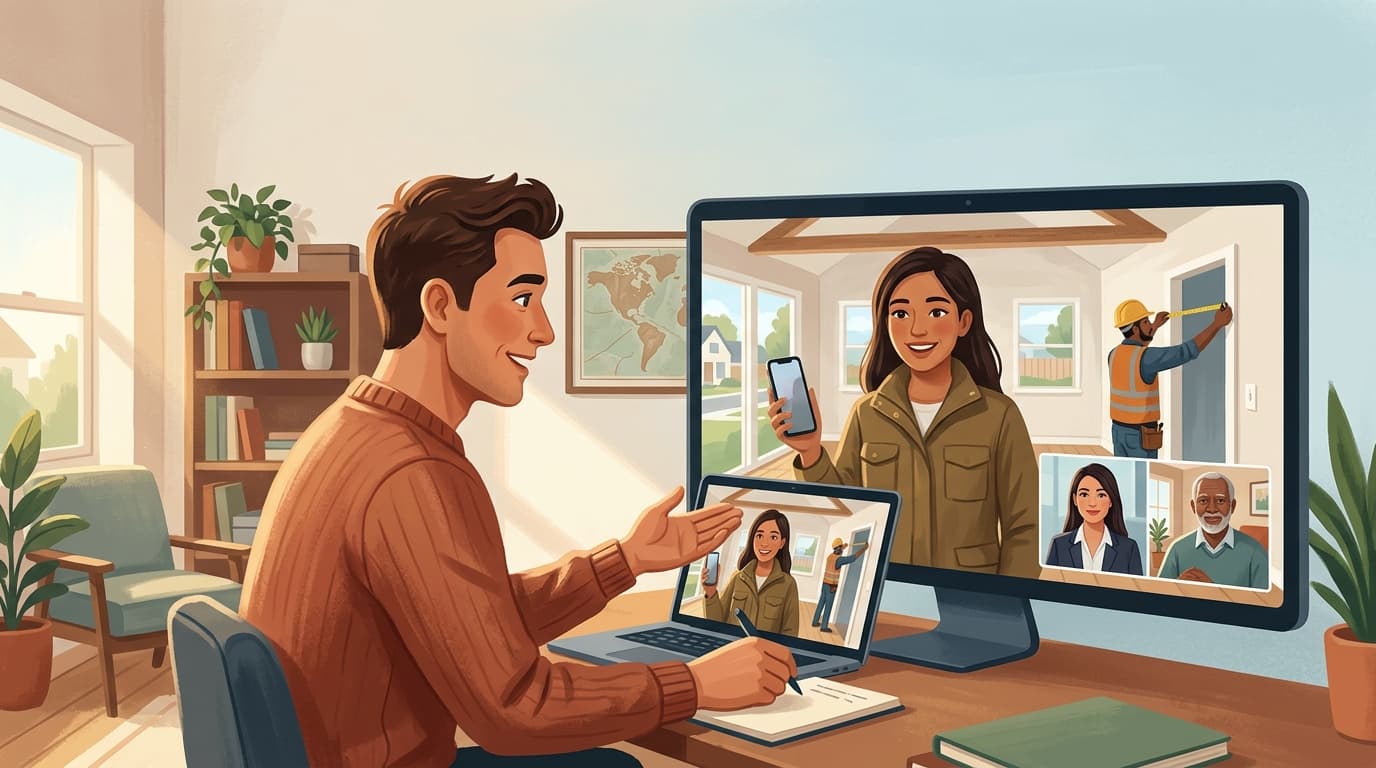
Virtual property tour: Ask your agent or property manager to do a live video walkthrough via FaceTime or Zoom. You can see the property condition, the neighborhood, and ask questions in real time.
Professional inspection: Always hire a licensed home inspector in the target market. They provide a detailed written report with photos. Do not skip this because you did not see it in person.
Neighborhood research: Google Street View, local crime maps (NeighborhoodScout, SpotCrime), and school ratings (GreatSchools.org) give you a data-driven picture of the neighborhood.
Rent comps: Use Zillow Rent Zestimate, Rentometer, and your agent's comparable active listings to verify that your rent estimate is realistic.
Managing the Property Remotely
With a good property manager, remote management is nearly as passive as any investment.
Systems to set up:
- All rent collected through your property manager's software (ACH to your account monthly)
- Stessa (free) to track income and expenses automatically
- A maintenance reserve account (keep 3-6 months of expenses liquid)
- Monthly or quarterly reports from your property manager
How to evaluate your property manager's performance:
- Are units leased quickly when vacant? (Under 30 days in a healthy market)
- Is rent collected and remitted on time?
- Are maintenance costs reasonable? (Get second opinions on anything over $500)
- Are you receiving regular financial statements?
If the answers are consistently no, find a new property manager. They are not irreplaceable.
Common Concerns (and the Reality)
"What if something goes wrong and I'm not there?" Your property manager handles it. That is their job. This is why choosing the right PM is the single most important decision in long-distance investing.
"How do I know the area is safe?" Research it. Crime data, neighborhood ratings, and a conversation with an active local investor who owns in that area will tell you more than a drive-by would.
"What if the tenant doesn't pay?" Your property manager initiates the eviction process per state law. A well-screened tenant dramatically reduces this risk.
"Don't I need to see the property first?" Helpful but not required. Many experienced long-distance investors have bought dozens of properties they have never physically visited.
Final Thoughts
Long-distance real estate investing is not a workaround or a compromise. For many investors, it is the optimal strategy - the one that actually produces cash flow instead of the break-even (or worse) results that local high-cost markets often deliver.
The keys are: choose your market on data, build a trustworthy team before you buy, and use the right tools to manage and track your portfolio remotely.
Ready to start? Roofstock is the best starting point for long-distance investors - every listing comes with an inspection report, rent roll, and neighborhood analysis built in.
Enjoyed this article?
Get our free starter kit and more guides like this.